4 Proofs That Stop Your 2026 Google Profile SEO From Flatlining
It was late evening when I finally looked up from my screen and realized something unsettling. My Google Profile’s rankings had plateaued—no movement, no improvement—despite all the effort I poured in. That sinking feeling? Yeah, I’ve been there. It dawned on me that I was stuck in a rut, and unless I found a new approach, I risked my local visibility vanishing into obscurity.
Understanding why your Google Profile SEO stalls is crucial, especially with 2026 just around the corner, bringing new algorithm updates and ranking mechanics. If your profile isn’t climbing, growing, or even maintaining its position, you’re essentially invisible to many potential local customers. And trust me, I learned the hard way that complacency isn’t an option in this game.
Today, I want to share with you the four proven tactics I adopted that kept my profile thriving instead of flatlining. These aren’t just generic tips; they are tried-and-true methods that have helped many local businesses maintain and even boost their visibility post-2025 updates. Implementing these strategies transformed my SEO approach, and I genuinely believe they can do the same for you.
But first, let’s address a common worry I hear all the time—”Is it really worth investing time into these SEO tactics? Will they make a real difference?” If you’ve ever wondered whether your efforts will pay off, you’re not alone. Early on, I made a critical mistake by ignoring the importance of on-profile signals and focusing solely on external backlinks. That oversight cost me valuable ranking points, and it’s a mistake I’d advise you to avoid.
For a comprehensive breakdown of the latest tactics, check out this detailed guide on local SEO strategies for 2026, which highlights how evolving signals are shaping rankings today. Now, let’s dive into why these four tactics are essential for your continued success and how they can help you beat the inevitable stagnation many encounter.
Prioritize Accurate Business Data
Start by claiming and verifying your Google Business Profile to ensure all information is precise and consistent. Double-check your name, address, and phone number across all online listings. Remember, discrepancies here can confuse Google’s algorithms and dilute your local relevance. I once neglected to update my NAP info after moving offices, which resulted in a significant drop in rankings. Correcting this and synchronizing data across platforms swiftly restored my visibility.
Optimize Your Profile with Targeted Keywords
Embed relevant local keywords naturally into your profile description and service categories. Use terms that your potential customers are searching for, such as “best pizza in Brooklyn” rather than vague phrases. In practice, I analyzed search queries in Search Console and identified high-volume terms, integrating them into my profile content. This boosted my local relevance and improved my Maps pack rankings noticeably.
Leverage Google Posts for Engagement
Regularly publish Google Posts showcasing promotions, updates, or new offerings. Think of them as digital billboards that signal activity and freshness to Google. During a slow period, I posted weekly updates about new menu items, which resulted in increased profile interactions and a rise in local rankings within weeks. Consistent posting indicates to Google that your business is active and relevant.
Enhance User Interaction Signals
Focus on encouraging customers to leave reviews, respond to inquiries, and upload photos. These interactions are powerful ranking signals. I once implemented a simple request for reviews on receipts, which gradually increased my positive feedback. Over time, this not only improved my review quantity but also amplified engagement signals, helping my profile climb in the local pack.
Monitor and Adjust Using Search Console Data
Regularly analyze your GSC insights to identify gaps or issues. Look for search queries that bring traffic but don’t convert, and optimize your profile accordingly. I found a handful of queries my competitors weren’t targeting—and by creating specific responses, I captured additional local search traffic. Continuous data analysis allows you to refine your strategy dynamically, staying ahead in the ever-changing local SEO landscape.
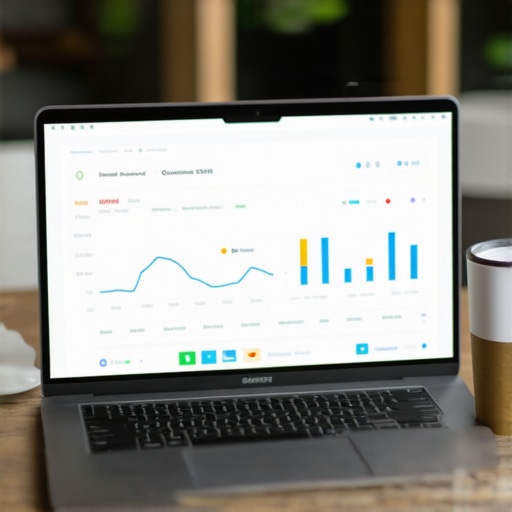
Image showing a business owner reviewing Search Console data on a laptop, emphasizing data-driven optimization for GBP rankings.
Many business owners and marketers believe that optimizing their Google Business Profile (GBP) is just about filling out the right details and hoping for results. However, behind the scenes, there are nuanced factors that can make or break your local ranking—factors that even seasoned SEO professionals sometimes underestimate or overlook. Let’s explore these hidden nuances that can elevate your GBP strategy beyond the basics.
A common misconception is that Google’s local rankings solely rely on visible signals like reviews and keywords. In reality, Google’s algorithm considers a complex web of data signals, including less obvious ones like user behavior, data consistency, and even local engagement patterns. For instance, a significant yet often ignored factor is how users are interacting with your profile—not just reviews, but also click-through rates, photo views, and website visits. These subtle signals, highlighted in studies by Moz and other industry experts, directly influence your rank in ways that are not immediately apparent.
Another mistake many make is neglecting the importance of data freshness. While it’s tempting to set and forget your profile information, Google favors profiles that exhibit recent activity—new posts, updated services, current promotions. This aligns with Google’s desire to showcase relevant and active businesses, especially in competitive local markets. Failing to maintain a fresh profile can result in stagnation or even penalties.
Additionally, the synchronization of your business data across multiple platforms enhances your profile’s credibility in Google’s eyes. Discrepancies in your NAP (Name, Address, Phone number) across directories, websites, and social profiles create confusion that hampers your rankings. Advanced practitioners routinely audit and clean these inconsistencies, understanding that this can provide a competitive edge. For more on this, check out my guide on local signal fidelity.
Let’s tackle a popular question from savvy marketers: *How do advanced interaction signals impact GBP ranking in 2026?*
The answer is that engagement metrics are becoming increasingly weighted in Google’s algorithm. User actions like photos uploaded, messages sent, bookings made, and reviews responded to all send positive signals, reinforcing your relevance and authority. Google views active profiles as more trustworthy, which translates into higher visibility in the Map Pack.
However, beware of falling into the common trap of neglecting negative signals, such as fake reviews or suspicious activity. Google actively filters out fraudulent or manipulated signals, which can drastically hurt your position if left unchecked. More about avoiding these pitfalls can be found in my comprehensive SEO tactics guide.
In conclusion, there’s a layered, multifaceted dimension to GBP ranking that often goes unnoticed. Mastering these nuances requires a strategic, data-driven approach—one that considers rich user behavior signals, maintains consistent and fresh data, and actively manages engagement metrics.
Are you making these critical oversights in your local SEO efforts? Let me know in the comments. For a deep dive into technical signal mastery, explore the full range of advanced strategies tailored for 2025 and beyond at your guide to GBP ranking success. Remember, understanding these hidden signals can give you the edge in an increasingly competitive local landscape.Maintaining your Google Business Profile’s (GBP) rankings over the long haul requires more than just initial setup and occasional updates. To ensure sustained visibility, I rely on a suite of specialized tools and methods designed for precision and efficiency. For example, I swear by Moz Local, which helps me audit and synchronize my business data across dozens of directories, ensuring NAP consistency—a critical factor in boosting local SEO. Additionally, BrightLocal’s review monitoring feature alerts me in real-time when new reviews are posted or negative feedback appears, enabling me to respond promptly and positively influence user engagement signals. These platforms provide comprehensive dashboards that simplify tracking profile performance and identifying opportunities for optimization.
Another essential tool in my arsenal is Search Console. I regularly analyze Search Console data—focusing on queries that drive traffic but underperform in conversions—to fine-tune my profile’s keyword targeting and service descriptions. This proactive approach keeps my profile aligned with evolving search intents and user behaviors.
For more elaborate strategies, I follow insights from authoritative sources like this in-depth guide that elaborates on maintaining a competitive edge amidst algorithm changes.
In terms of methods, I emphasize routine ‘health checks’ of my profile, including reviewing photo relevance and updating posts regularly. This keeps my profile active and signals to Google that my business is vibrant and trustworthy.
Looking ahead, I predict that automation and AI-driven analytics will play an even bigger role in local SEO management, allowing businesses to respond faster and more effectively to shifts in user behavior. Therefore, I recommend integrating tools that leverage machine learning to predict ranking fluctuations and guide your proactive adjustments.
Ready to level up your GBP maintenance routine? Start by implementing scheduled audits with Moz Local, and you’ll quickly spot and rectify data inconsistencies that could be holding you back. Continuous, precise management of your profile isn’t just advisable—it’s essential for long-term success. For a broader understanding of advanced GBP strategies, visit this comprehensive resource.
What I Wish I Knew About GBP Ranking, Maps Pack, and Google Profile SEO
One of the most profound lessons I learned is that SEO success isn’t just about ticking boxes; it’s about understanding the subtle signals Google interprets daily. I once focused solely on reviews and keywords, neglecting user behavior nuances, which cost me valuable ranking opportunities. Real growth came when I started paying attention to engagement patterns like click-through rates and photo views—these hidden signals made a tangible difference in my local visibility.
Another lightbulb moment was realizing that data freshness is a decisive factor. Updating my profile regularly with new posts and services kept my listing vibrant in Google’s eyes, preventing stagnation. Overlooking this simple yet powerful tactic was a mistake I won’t repeat, as active profiles signal ongoing relevance, essential in competitive markets.
Furthermore, I discovered that consistent business data across all platforms isn’t just about professionalism—it’s a core SEO pillar. Missing NAP synchronization diluted my local relevance. By auditing and correcting data inconsistencies, I gained a noticeable boost in my rankings. This proactive approach helps me stay ahead, especially when competitors neglect data hygiene.
Lastly, I underestimated the power of engagement signals—responding to reviews, encouraging photos, and actively communicating with customers. These interactions create a positive feedback loop that Google rewards. I learned that neglecting user interaction can leave you invisible, regardless of how optimized your profile is. Embracing these nuanced signals has transformed my SEO outcomes and can do the same for you.
My Go-To Resources for Long-Term GBP Success
- Moz Local: I trust it for comprehensive business data audits and ensuring my NAP consistency. It simplifies managing multiple listings, which is crucial for sustained visibility.
- BrightLocal: Their review monitoring and response features enable me to build active customer engagement, a vital ranking factor I can’t ignore.
- Google Search Console: Analyzing search queries and performance metrics here keeps my profile aligned with evolving user interests and helps uncover hidden keyword opportunities.
- My Custom Dashboard: Combining insights from various tools allows me to track progress, identify gaps, and stay agile in my SEO strategy.
These tools have been game-changers, helping me maintain a competitive edge in the increasingly complex local landscape. For a more detailed roadmap, I recommend checking out this comprehensive guide.
The Moment You Start Creating Your Own Path
Remember, the journey to mastering Google Profile SEO is ongoing, but every step you take toward understanding the nuanced signals will bring you closer to long-term success. Don’t let the complexity discourage you—embrace the process, keep experimenting, and stay informed. Your visible, thriving profile is within reach, and the next breakthrough is just a strategy tweak away.
What’s been the most surprising insight you’ve discovered about your Google Profile SEO? Share your experiences below—I’d love to hear your story!
This post really hit home for me because I’ve experienced that frustrating dip in Google Profile rankings despite doing everything ‘by the book.’ I agree with the emphasis on data freshness—stale updates can definitely signal to Google that your business might not be as active. What I’ve found helpful is integrating Google Posts regularly and actively responding to reviews, which seems to boost engagement signals that Google seems to value more and more. I think one of the sneaky factors often overlooked is user behavior beyond reviews—like how many click-throughs your profile gets or how many photos are viewed. Has anyone experimented with A/B testing different types of posts or photos to see what increases engagement most? I’d love to hear different tactics people use to keep their profiles active and relevant in such a competitive space.
Reading this post really resonated with me, especially the part about data freshness and active engagement signals. I’ve noticed firsthand that consistently updating my Google Business Profile with new posts and fresh photos helps maintain visibility, even when competitors neglect this aspect. It’s easy to underestimate how much user interaction metrics, like click-through rates and photo views, influence rankings. I’ve experimented with different types of content—such as special promos, holiday updates, and behind-the-scenes photos—and observed tangible boosts in engagement and visibility. One challenge I face is balancing regular posting without overwhelming customers or diluting the message. Has anyone found an effective content calendar or automated system that keeps posts relevant but not repetitive? Additionally, I wonder how much weight Google assigns to negative signals, like fake reviews, and how vigilant we should be to monitor and report suspicious activity. Curious about everyone’s experience—what’s worked best for you in keeping your profile dynamic and engaging in these competitive local markets?