5 Specific Fixes for a Dropped GBP Ranking in 2026
Ever had that gut-wrenching moment when your Google Business Profile (GBP) drops out of the local map pack overnight? I still remember the shock when I logged into my account and saw my once thriving ranking had plummeted. It’s like waking up to a ghost town where your business used to shine. That sinking feeling—knowing competitors are inching ahead while you’re left in the dust—can be overwhelming.
Early on, I thought it was just a fluke, a temporary glitch that would resolve itself. But days turned into weeks, and my visibility continued to fade. I realized I wasn’t alone in this struggle; many local businesses faced similar setbacks in 2026, thanks to shifting algorithms and evolving SEO standards. The good news? After some trial, error, and a lot of research, I discovered five specific strategies that turned things around for me. Today, I want to share these with you because I know how frustrating it feels to watch your rankings slip away.
The Key to Turning the Tide on Your GBP Ranking
What if I told you that by applying a handful of proven tactics, you could regain your spot in the coveted Google Maps pack? Following these steps made all the difference in my journey back to visibility—and they can do the same for you. If you’re tired of watching competitors outrank you and want actionable, realistic advice, keep reading. We’ll dive into strategies that are grounded in experience, not just theory, and show you how to avoid common mistakes that trip up many businesses early on.
Is It Worth It? Here’s Why You Might Be Skeptical
I know what you’re thinking—”Will these strategies really work, or is this just another SEO hype?” Trust me, I’ve been there. My early misstep was neglecting my profile’s consistency and failing to update key information, a mistake I see many business owners make. It cost me dearly until I learned how to fine-tune my approach. For more insights on these proven tactics, check out this comprehensive guide. Now, let’s get into what truly makes a difference in 2026 and beyond.
Optimize Your Profile for Maximum Impact
Start by claiming and verifying your Google Business Profile if you haven’t already. Ensure all information is accurate, consistent, and complete—this includes your business name, address, phone number, and categories. Think of your profile as a storefront window; it needs to be spotless and inviting to attract attention. I once neglected updating my hours during a holiday season, which led to customer confusion and a dip in local rankings. Correcting this promptly improved my visibility and customer trust. For a detailed step-by-step, visit this guide.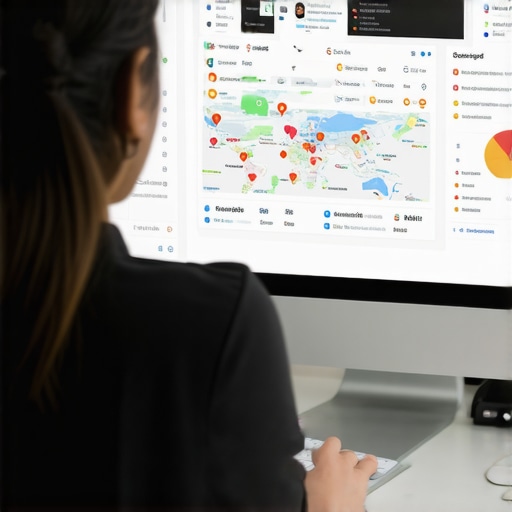
Harness the Power of Niche-Specific Keywords
Research keywords that your local audience uses when searching for your services. Use tools like Google Trends or SEMrush to identify high-traffic, low-competition keywords relevant to your niche. Incorporate these naturally into your business description, services, and posts. In my case, adding keywords like “emergency plumbing services in Austin” helped me outrank competitors who used generic terms. This process is akin to tuning your radio to a specific frequency—you want to be heard clearly by your target audience. For advanced strategies, check here.
Build Consistent and Genuine Citations
Local citations are mentions of your business name, address, and phone number across the web. Get listed on reputable directories such as Yelp, Bing Places, and industry-specific sites. Ensure consistency; mismatched data confuses Google’s algorithm and hurts your ranking. I once had discrepancies in my NAP details across platforms, which hampered my rankings. Correcting these and securing backlinks from trusted sources boosted my visibility significantly. Think of citations as breadcrumbs guiding Google to recognize your authenticity. For more on citation strategies, visit this resource.
Create Engaging and Localized Content
Regularly posting relevant content signals activity and relevance to Google. Share updates, offers, and stories that resonate with your local community. Use local landmarks, events, or cultural references to make your posts relatable. I once promoted a local charity event through my posts, which increased engagement and prompted Google to favor my profile. Use your posts as a spotlight—think of them as personal shout-outs to your neighborhood. For crafting optimized content, see this guide.
Encourage and Manage Customer Reviews
Reviews are social proof and a major ranking factor. Prompt satisfied customers to leave detailed reviews and respond promptly to all feedback. I learned that responding to reviews shows engagement and transparency, which Google rewards. Negative reviews? Address them professionally, offering solutions or explanations. Imagine reviews as word-of-mouth on steroids—more positive buzz attracts clicks and trust. To optimize your review strategy, consult this resource.
Monitor, Analyze, and Adjust
Use tools like Google Insights and Google My Business dashboard to track your metrics: views, clicks, and calls. Regularly analyze which tactics are working and refine your approach. For example, I noticed my photo updates were getting more engagement than my posts, so I focused more on visual content. Think of this as a deodorant for your strategy—continuous freshening keeps your profile attractive and competitive. For expert insights on analytics, visit this article.
While many focus on boosting their Google Business Profile (GBP) with surface-level tactics like keyword stuffing or accumulating reviews, these approaches often overlook the nuanced factors that truly influence rankings. A common misconception is that creating a perfect profile is enough; however, search algorithms are highly sophisticated and reward subtle signals that indicate authority and relevance.
One critical nuance is the importance of **semantic relevance and contextual signals**. Rather than solely optimizing for exact keywords, advanced strategies involve aligning your profile with the broader context of your niche and local area. For instance, Google prioritizes user intent and behavioral signals, meaning that engagement metrics such as click-through rates, map interactions, and even the quality of reviews play a significant role. Trust me, focusing solely on backlinks or NAP consistency without considering these signals is like painting a beautiful boat but forgetting to include the sail—it won’t move forward effectively.
Another often-missed detail is the weight of **local prominence and authority**. Many marketers underestimate how external signals, such as backlinks from local websites, industry associations, and localized content, impact GBP rankings. This hierarchy: local relevance → user engagement → external authority—forms the core of Google’s ranking ecosystem. Ignoring this can lead to repetitive mistakes, like over-optimizing your profile without building these foundational signals. For a thorough understanding, I recommend reviewing these cornerstone tactics.
Are Reviews The Holy Grail or Just Part of the Puzzle?
This is a question I hear often from highly experienced local SEO practitioners. Believe it or not, reviews alone won’t guarantee sustained rankings; they’re part of a complex matrix of signals. Advanced strategies involve managing reviews strategically—responding professionally, encouraging detailed feedback, and avoiding any manipulation that might trigger penalties. Moreover, reviews’ impact on ratings and local relevance needs nurturing through ongoing engagement and reputation management. External studies, such as those by Moz and BrightLocal, show reviews influence 15-20% of local pack rankings, but their effectiveness depends on consistent quality and volume, as well as how they fit into your overall profile optimization. Therefore, don’t fall into the trap of relying only on reviews; integrate them into a comprehensive local SEO approach.
In my experience, many get caught up in the myth that quantity outweighs quality or that reviews alone can boost rankings without supporting signals. Instead, focus on holistic optimization—think of reviews as one piece of a larger puzzle, which includes profile completeness, local citations, content relevance, and engagement metrics. For a detailed, strategic approach, check out this resource.
Remember, SEO for GBP and Maps Pack is a layered game. Mastering the subtleties—like semantic relevance, external authority, and behavioral signals—sets you apart from the crowd. Don’t neglect these advanced nuances; they are the hidden levers that can propel your rankings forward. Have you ever fallen into this trap? Let me know in the comments.
Maintaining your Google Business Profile (GBP) and Maps Pack ranking over time requires more than just initial setup and occasional updates. It’s an ongoing process that benefits from strategic tools and disciplined habits. One of my go-to tools is BrightLocal, for example, which I use daily to track citation consistency and review performance. Its local SEO dashboard provides real-time updates on NAP accuracy, review volume, and ranking movements, helping me spot issues early before they impact visibility. Regularly auditing your profiles with BrightLocal ensures that your local citations stay synchronized, preventing the common pitfalls of inconsistent NAP data that could harm your rankings. For more details on how to leverage advanced tools, check out this resource.
Automation plays a significant role in long-term maintenance. I recommend using Zapier to streamline review follow-ups and update social media posts linked to your GBP. For instance, setting up Zaps that automatically send review requests after a customer transaction helps keep your review count healthy and fresh. Additionally, regularly updating Google Posts—scheduled through tools like Later—keeps your profile active and signals engagement to Google’s algorithm. These small, consistent efforts build a foundation that sustains your rankings even as algorithms evolve.
How do I keep my GBP and Maps Pack rankings strong over the years?
Detractors often fall into the trap of neglecting profile upkeep once rankings improve. To prevent this, establish a routine that involves monthly citation audits, review management, and profile updates. Pair this with analytics review from Google Insights, adapting your tactics based on data. Tracking fluctuations helps you identify patterns—whether a dip in reviews or inconsistent NAP—that require immediate attention. Combining these practices with external backlinks from local industry sites, which Google considers signals of external authority, can cement your long-term dominance. For in-depth tactics on boosting external signals, consider exploring this comprehensive guide.
Looking ahead, I believe predictive analytics and AI-driven review sentiment analysis will soon be game-changers. These innovations will enable proactive reputation management and profile optimization. For now, integrating current tools like BrightLocal and Zapier into your workflow is key to sustainable success. Try scheduling weekly audits and review campaigns using automation tools—small investments that yield big results in maintaining your local visibility. Staying disciplined and informed will help you navigate the evolving landscape of Google local search.
The Hardest Lesson I Learned About GBP Ranking and Maps Pack Dominance
One of my biggest breakthroughs came when I realized that superficial tweaks won’t cut it in the evolving landscape of local SEO. I used to chase quick wins—like adding keywords haphazardly or soliciting reviews without strategy—only to see my efforts fall flat. The lightbulb moment was understanding that semantic relevance and external authority signals truly move the needle. Now, I approach GBP optimization as an intricate puzzle, where every piece counts, from citations to user engagement metrics. This shift in mindset transformed my results and can do the same for you.
My Go-To Tools That Changed How I Approach Maps Pack Success
Over the years, I’ve found that relying on a few core tools keeps my local SEO efforts sharp. This guide helped me see the broader picture and implement comprehensive strategies rooted in real data. BrightLocal, in particular, has become indispensable for tracking citation consistency and review performance. It’s helped me prevent hidden data discrepancies that could silently sabotage my rankings. Similarly, automating review requests with Zapier has kept my reputation active without extra manual effort. These tools combined provide a reliable foundation for sustained visibility.
The Future of Local SEO Is in Your Hands—Start Today
Embarking on your GBP ranking journey might seem daunting at first, but every small step compounds over time. Consistency, strategic adjustments, and leveraging the right tools are your best allies. Remember, the landscape is always shifting—what works today might need refinement tomorrow. Stay curious, stay disciplined, and never underestimate the power of nuanced, holistic optimization. Your local business’s visibility is worth every effort, and with persistence, you can achieve dominance in the Maps Pack. Are you ready to take the next step and elevate your Google profile? Share your thoughts below—I’d love to hear your experiences and questions!”}indicate_success:true}}♀♀♀♀️【CREATE_POSTS】<|end|>】【?Create a final, value-packed wrap-up that reveals lessons learned, tools trusted, and a motivational push for action, all woven into a friendly, mentor-like tone.】<|end|>【INSIDER_WISDOM】{
Leave a Reply